The Miniaturized 6-DOF Hybrid Robot
A New Frontier in Micromanipulation
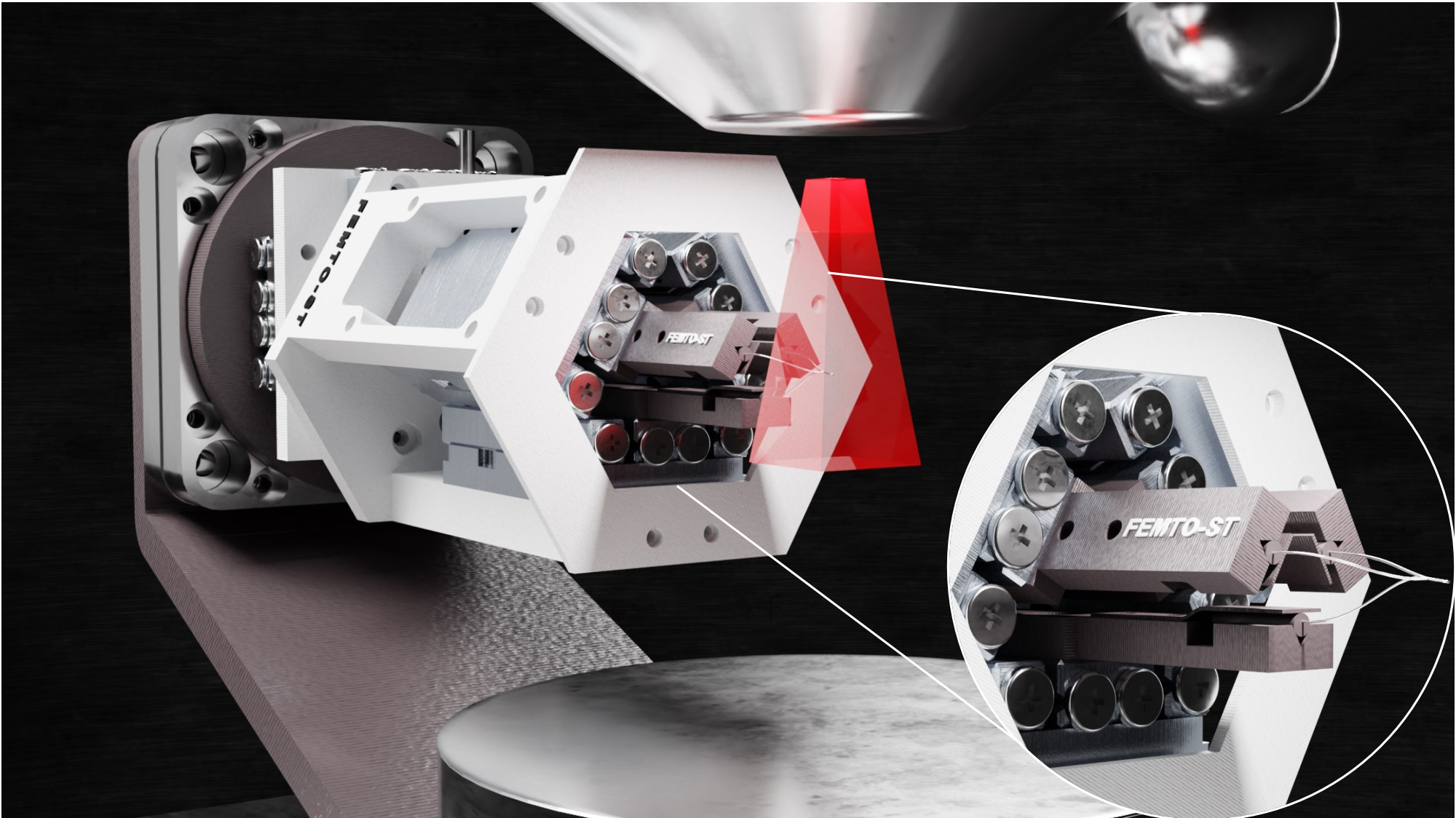
In the ever-evolving realm of nanoscience and microscopic exploration, innovation drives discovery. Imagine a robotic companion capable of navigating the delicate landscapes of the micro-world with unparalleled grace and precision. The Miniaturized 6-Degree-of-Freedom (DOF) Hybrid Robot, meticulously designed for Scanning Electron Microscope (SEM) applications, is a technological marvel poised to revolutionize micromanipulation.
This compact yet highly advanced device blends the best of serial robotics with parallel continuum structures, offering unprecedented versatility and control for researchers and engineers alike. Its dexterity allows scientists to push the frontiers of their fields, unlocking new perspectives in nanotechnology, micro-fabrication, materials science, and biomedical research.
The Science Behind the Design: A Hybrid Approach
The robot model and kinematics
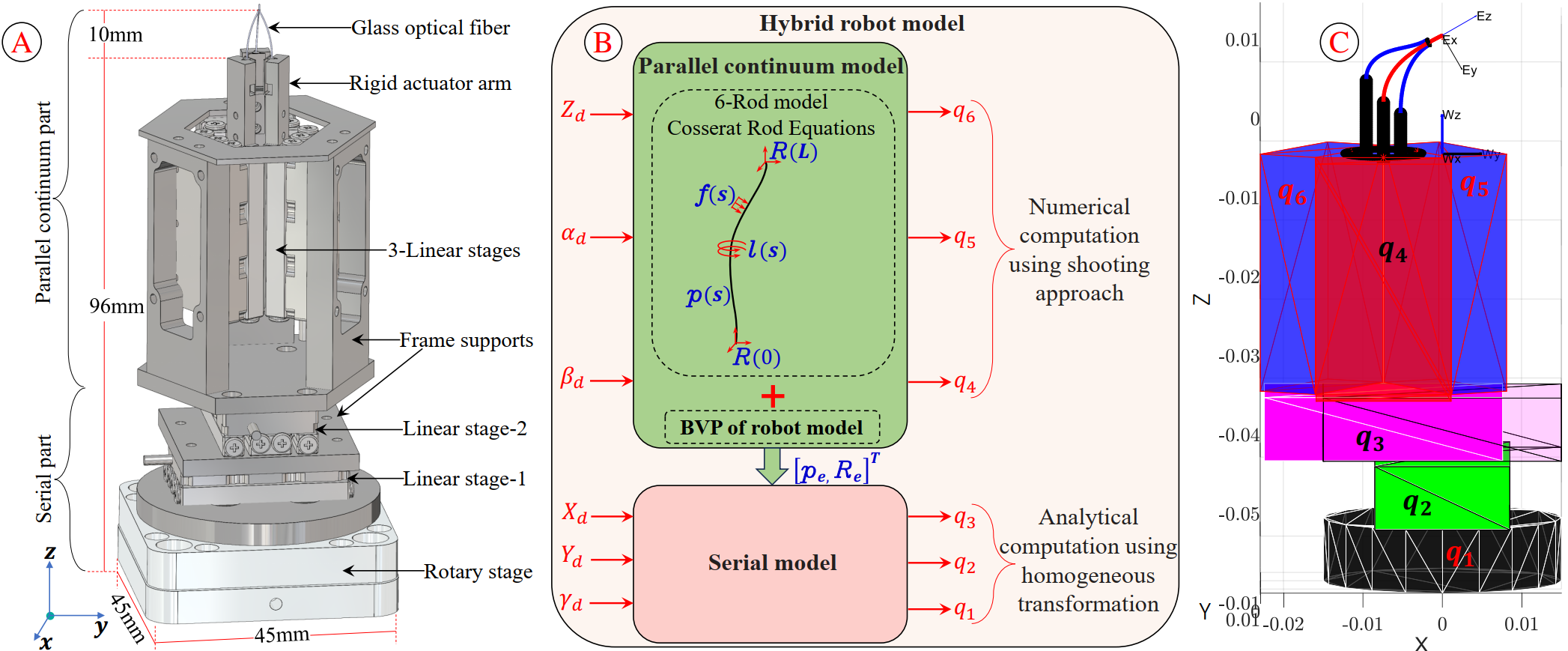
These fibers bend and articulate under precise control, granting the robot a fluid yet stable range of motion. The design supports six degrees of freedom:
- Three translational axes: movement along X, Y, and Z coordinates.
- Three rotational axes: roll, pitch, and yaw, enabling complete spatial orientation.
The archievable robot workspace
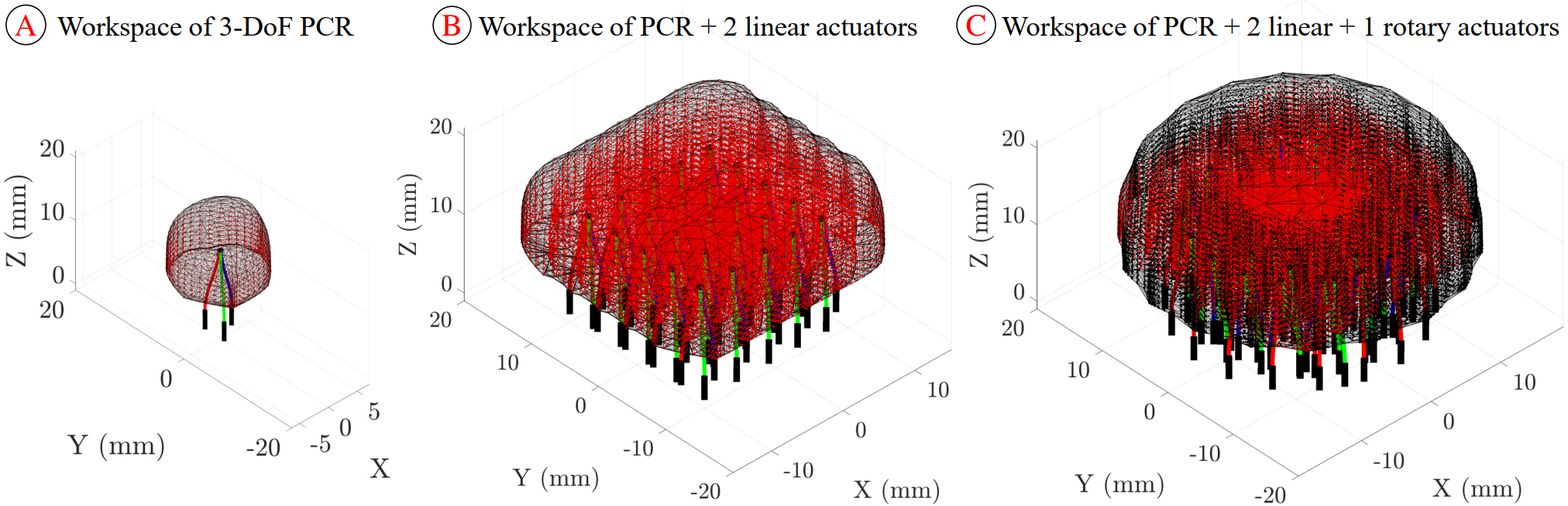
The combination of these movements empowers the robot to perform highly complex micromanipulation tasks, from orienting samples to tracing intricate patterns on micro-surfaces.
Unmatched Capabilities for Diverse Applications
The Miniaturized 6-DOF Hybrid Robot was engineered with versatility at its core. It is designed to thrive in the demanding conditions of SEM environments, where both precision and adaptability are critical. Below are some of the key capabilities that make this robot a game-changer in the field:
1. Goniometric Micromanipulation
Goniometry involves rotating objects at precise angles to achieve multi-dimensional views. In microscopic research, where even the slightest misalignment can distort findings, this capability is vital. The hybrid robot's goniometric control allows users to rotate microscopic samples around any axis with sub-micron precision, facilitating accurate imaging and analysis from various perspectives.
2. Drawing and Writing on Micro-Scales
The hybrid robot's architectural design makes it capable of mimicking human hand movements at a microscopic level. Equipped with a precision tip, the robot can draw and write intricate shapes and patterns on 2D planar surfaces or complex 3D objects like spheres. This capability opens up new possibilities for nano-structural design, micro-circuit fabrication, and scientific labeling.
3. Freestyle Micromanipulation
For scenarios that demand on-the-fly adjustments, the robot excels in freestyle manipulation. This manual control mode allows users to guide the robot’s movements in real time, making it ideal for tasks such as micro-sample positioning, precision assembly, and interactive experimentation.
Engineering Excellence: Built for Performance
The Miniaturized 6-DOF Hybrid Robot is a masterpiece of engineering innovation. It is powered by piezoelectric actuators, renowned for their nano-scale precision and stability. Unlike traditional thermal or electromagnetic actuators, piezoelectric systems operate flawlessly in vacuum environments, such as those inside SEM chambers. They generate minimal heat and electromagnetic interference, preserving the integrity of SEM imaging.
Software and Control: Intuitive Yet Powerful
Behind every great robot is a robust control system. This hybrid robot is no exception. It is equipped with custom-built software that allows users to simulate, control, and monitor its movements in real-time. Developed in MATLAB and Python, the software features user-friendly interfaces and supports pre-programmed path planning, which reduces setup time and enhances operational efficiency.
Beyond the Lab: Applications in Research and Industry
The potential applications of the Miniaturized 6-DOF Hybrid Robot are vast and varied. Its capabilities make it indispensable for a wide range of scientific and industrial endeavors, including:
- Micro/nano-material characterization: Studying the mechanical, electrical, and optical properties of materials at microscopic scales.
- Nanotechnology development: Prototyping and assembling nano-devices and photonic components.
- Biomedical research: Manipulating biological cells and tissues with minimal disruption, advancing fields like cellular biology and biophysics.
- Advanced manufacturing: Performing precision micro-assembly and quality control in industries that demand extreme accuracy.
Pioneering the Future of Microscopic Discovery
The Miniaturized 6-DOF Hybrid Robot is not just a technological achievement—it is a catalyst for discovery. Its unique blend of flexibility, precision, and adaptability empowers researchers to unlock new possibilities in fields ranging from materials science to biotechnology. By overcoming the traditional limitations of micro-manipulation, this robot paves the way for innovations that will shape the future of science and technology.