Caturo: Redefining Concentric Tube Robotics
A Revolutionary Leap in Miniaturized Robotics
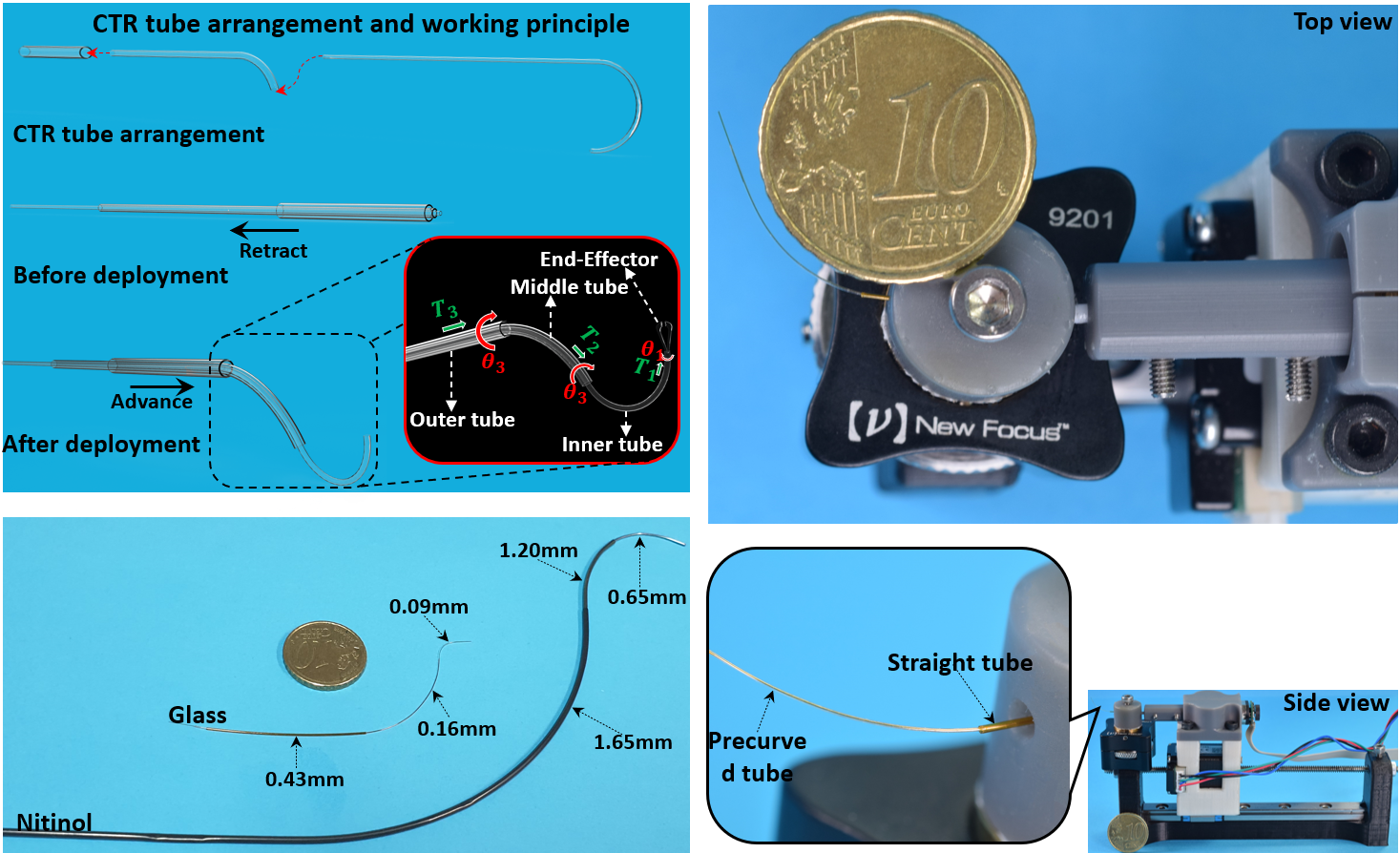
Medical robotics has witnessed remarkable advancements in recent years, with concentric tube robots (CTRs) at the forefront of minimally invasive surgery. Traditionally, CTRs have relied on Nitinol for its superelastic properties and biocompatibility. However, my latest research introduces a groundbreaking innovation: Caturo, a sub-millimeter diameter glass-polymer concentric tube robot, offering unprecedented flexibility, high curvature, and enhanced adaptability. This is the smallest CTR in the literature and the first that is made of glass backbone
Breaking Boundaries with Glass-Polymer Composites
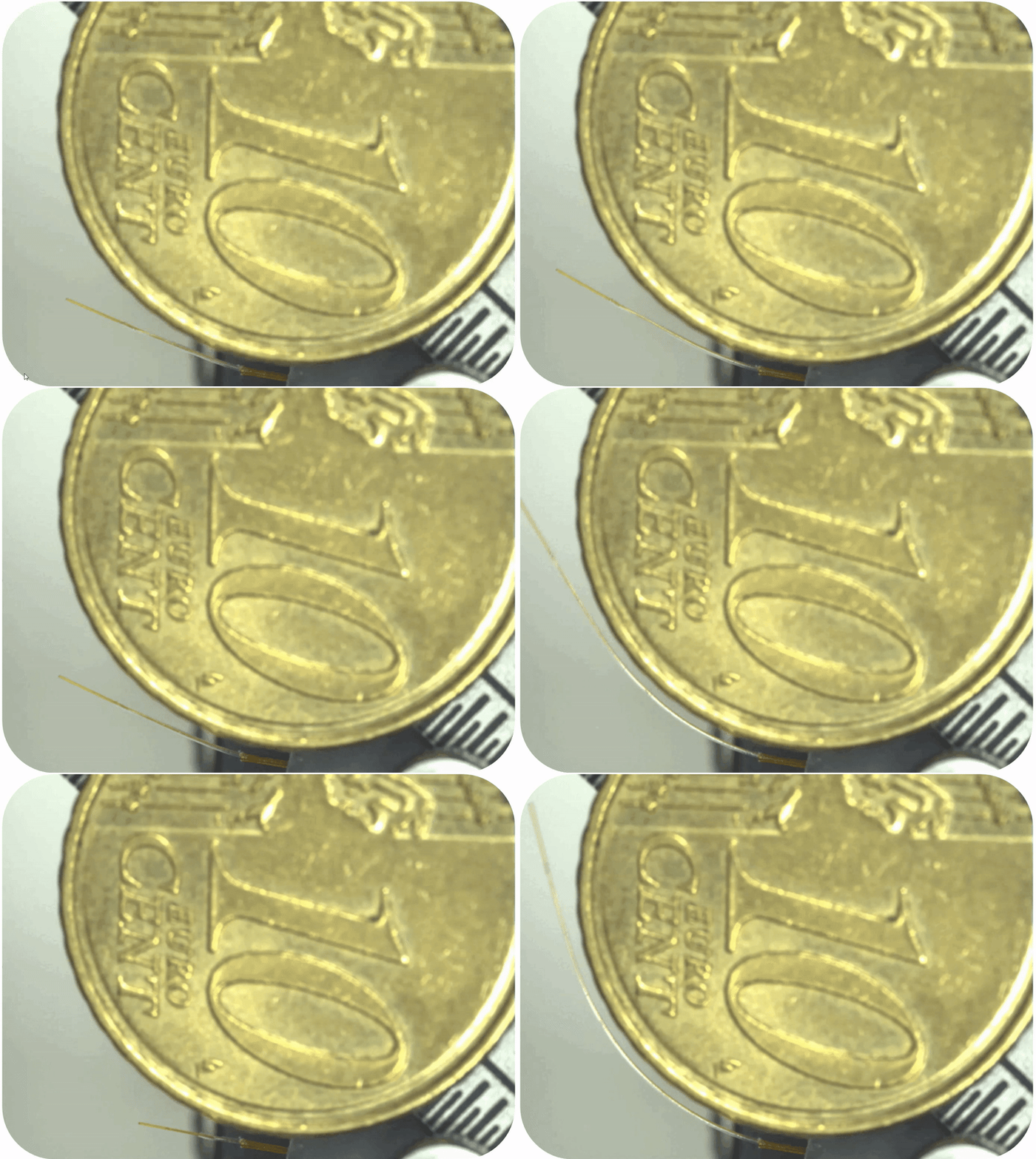 The development of Caturo is driven by the need for enhanced dexterity, lower friction, and greater ease in shape-setting compared to conventional Nitinol-based CTRs. By leveraging glass-polymer composite tubes, we have successfully achieved a radius of curvature as low as 5mm using a 90µm , setting a new benchmark for precision and maneuverability in confined surgical spaces. Beside is a deployment operation, showing the deformation of the robot taking the curvature shape of a 10 euro coin.
Other demonstrations of the robot include: 3D Helical Pre-Curved Tube Deployment, Conical-Spiral Path Navigation, Needle-Orifice Constrained Deployment. These capabilities enable Caturo to navigate delicate anatomical structures with unprecedented precision, opening new possibilities for procedures such as vitreoretinal surgery, optical biopsy, and minimally invasive therapeutic interventions
The development of Caturo is driven by the need for enhanced dexterity, lower friction, and greater ease in shape-setting compared to conventional Nitinol-based CTRs. By leveraging glass-polymer composite tubes, we have successfully achieved a radius of curvature as low as 5mm using a 90µm , setting a new benchmark for precision and maneuverability in confined surgical spaces. Beside is a deployment operation, showing the deformation of the robot taking the curvature shape of a 10 euro coin.
Other demonstrations of the robot include: 3D Helical Pre-Curved Tube Deployment, Conical-Spiral Path Navigation, Needle-Orifice Constrained Deployment. These capabilities enable Caturo to navigate delicate anatomical structures with unprecedented precision, opening new possibilities for procedures such as vitreoretinal surgery, optical biopsy, and minimally invasive therapeutic interventions
Kinematic and Stability Analysis
The forward kinematic model (FKM) and inverse kinematic model (IKM) have been rigorously validated to ensure precise motion control and stability. Additionally, comprehensive torsional stability analysis has been conducted to mitigate the risk of elastic snapping, a critical factor in medical robotics where patient safety is paramount.
The Future of Miniaturized Robotics
Beyond conventional medical applications, Caturo introduces an innovative approach to pre-curved optical fiber deployment for laser-based microsurgery. Furthermore, its fluid suction and delivery capabilities make it suitable for tasks such as targeted drug delivery and biopsy sample collection. The advent of Caturo represents a significant milestone in medical robotics, enabling ultra-fine manipulation within previously inaccessible anatomical spaces. With its sub-millimeter design, high curvature, and adaptable fabrication process, this technology has the potential to revolutionize microsurgery, optical diagnostics, and beyond.
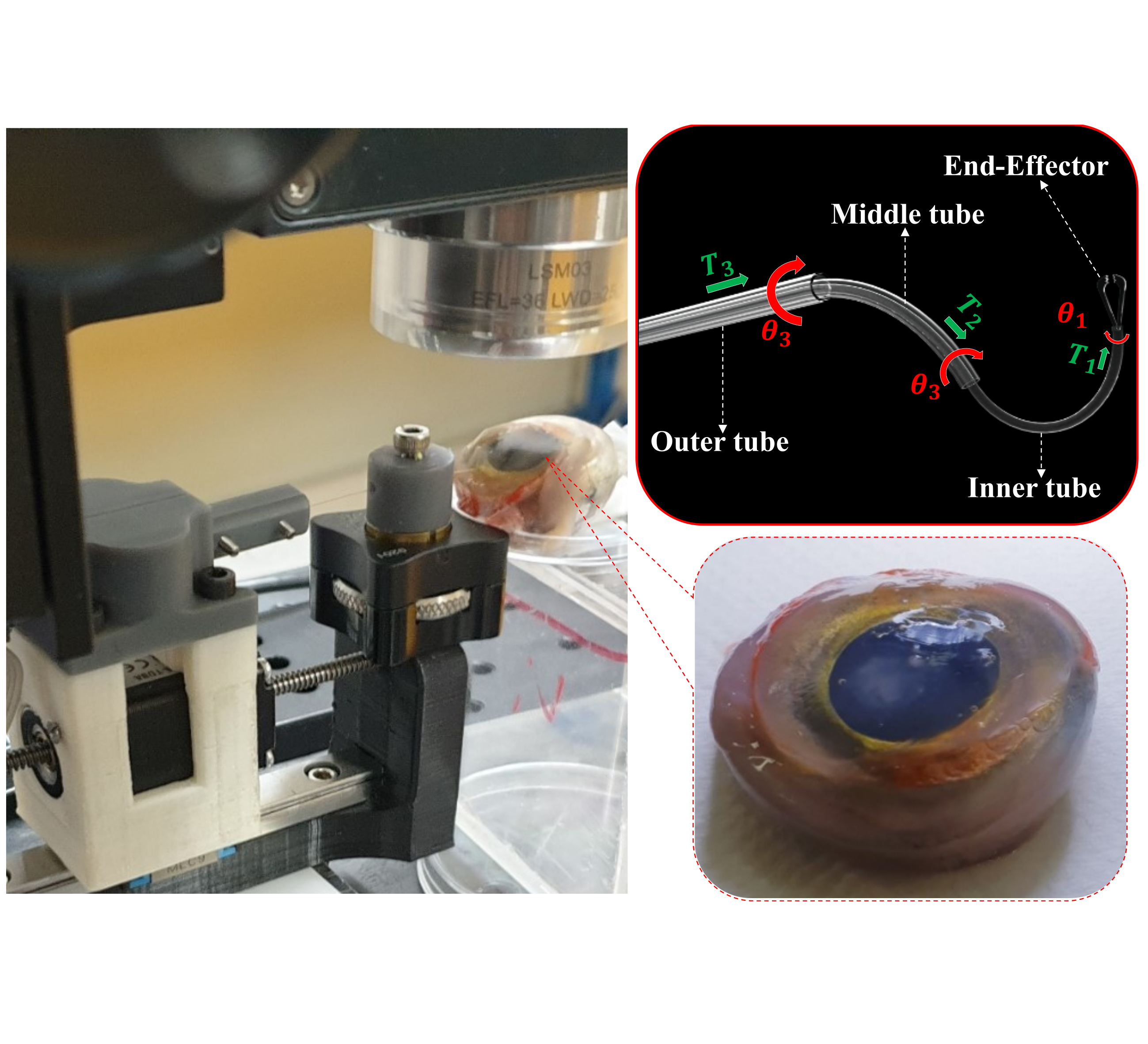 As we continue refining Caturo, our focus will be on enhancing its control systems, integrating advanced sensors, and exploring broader applications in biomedical research and soft robotics. Stay tuned for more updates on this transformative journey in miniaturized robotics!
For further inquiries or collaboration opportunities, feel free to reach out to me or my coleagues at FEMTO-ST Institute, Univ. Bourgogne Franche-Comté.
Click for the published article on glass CTR
Click for the published survey article of CTR